
Discover why tracking functional improvement outperforms pain scores in chronic pain management.
Learn how Remote Therapeutic Monitoring (RTM) enables continuous functional tracking with Medicare reimbursement.

From Pain Scores to Real Lives
For decades, pain management has centered on one question: How much does it hurt?
But emerging evidence shows that pain scores alone rarely capture what matters most to patients: their ability to move, work, sleep, and live.
The more meaningful question is: Can my patient function better? Is there an improvement in daily life.
This shift from symptom suppression to functional restoration defines modern pain medicine—and Remote Therapeutic Monitoring (RTM) makes it clinically and economically viable.
Two patients with identical pain scores can have vastly different lives. One may be bed-bound. Another may work full-time.
Pain intensity doesn't reveal whether treatment is working. Functional metrics do.
How to Measure Meaningful Recovery
True recovery means measurable changes in daily functioning:
- Mobility and activity levels – walking distance, exercise tolerance, movement patterns
- Sleep quality and duration – restorative rest that supports pain modulation
- Self-care and independence – performing daily tasks without assistance
- Work and social participation – returning to productivity and meaningful relationships
- Medication management – reducing reliance on opioids and other pain medications
- Overall life satisfaction – improved quality of life and well-being
These outcomes directly correlate with long-term recovery and what patients value most.
Key Insight: In chronic pain, functional improvement serves as both a clinical endpoint and a behavioral motivator. When patients see measurable progress in their daily lives, they stay engaged with treatment and continue building recovery momentum.
What is Remote Therapeutic Monitoring (RTM)?
Before RTM, clinicians relied on episodic office visits and patient recall. Functional changes happening between appointments went unobserved.
RTM changes that.
Established by the Centers for Medicare & Medicaid Services (CMS) in January 2022, RTM created a formal reimbursement framework for tracking therapeutic outcomes remotely.
RTM vs RPM: Understanding the Difference
RTM (Remote Therapeutic Monitoring) tracks non-physiologic therapeutic responses:
- Functional capacity and mobility
- Pain interference with daily activities
- Medication adherence
- Therapy compliance
RPM (Remote Physiologic Monitoring) tracks physiologic data:
- Heart rate and blood pressure
- Blood glucose and weight
- Oxygen saturation
Both are Medicare-covered but serve different clinical purposes. For pain management, RTM's focus on functional outcomes makes it the natural fit.
Medicare RTM Codes: The Basics
Five primary Medicare codes support RTM services:
- 98975: Initial setup and patient education (once per episode)
- 98977: Device supply and data transmission (per 30 days)
- 98980/98981: Monthly clinical review and interaction time
Key Requirements:
- 16 days minimum patient engagement per 30-day period
- 20 minutes minimum provider management time monthly
- Patient consent for remote monitoring
These codes enable sustainable remote care for chronic pain, musculoskeletal conditions, and post-surgical rehabilitation—fields where functional outcomes matter most.
Note: Significant changes are coming January 1, 2026 that will expand access.
Why Functional Monitoring Transforms Pain Care
1. Earlier Intervention
Continuous tracking identifies deterioration before it becomes clinically significant. If mobility plateaus or sleep worsens, you can make treatment adjustments sooner.
2. Personalized Treatment
Functional data provides context. Two patients with similar diagnoses might respond differently to identical therapies. Individual tracking enables truly personalized care.
3. Objective Evidence for Multimodal Therapy
RTM may provide objective data that help clinicians document functional trends during physical therapy, exercise, or behavioral care.
4. Reduced Opioid Reliance
Studies* show that improved function in pain management programs is often associated with lower opioid use. Tracking progress helps teams support balanced, data-driven care.
5. Improved Practice Sustainability
RTM is reimbursable by Medicare and many commercial payers, helping practices deliver value-based, measurable outcomes.
*Wilson M et al., 2023, Crouch TB et al., 2021
Who Benefits from RTM?
RTM utilization data shows 59%* of services target musculoskeletal conditions—where functional metrics are most measurable and impactful.
Physical Therapists and PM&R Specialists
Monitor adherence to home exercise programs, track motion and sleep, correlate reported pain with actual activity data. Objective functional trends guide more targeted rehabilitation.
Pain Management Specialists
Track mobility, activity, and medication use in patients with spinal cord stimulators, chronic back pain, and complex regional pain syndrome. Get insight beyond procedural outcomes.
Primary Care Physicians
Most chronic pain is managed in primary care. Integrate functional recovery tracking alongside comorbidity management using established RTM codes.
*Peterson Center on Healthcare. (2025, April).
Clinical Evidence: What the Data Shows
Clinical research on functional restoration interventions has demonstrated that interventions targeting functional restoration yield better long-term outcomes:
- Greater treatment satisfaction
- Improved adherence to exercise and behavioral therapy
- Reduced dependence on pharmacologic management
- Fewer unplanned visits and complications
Digital RTM platforms translate self-reported data and activity patterns into functional graphs clinicians can review during follow-ups. Instead of a single pain score snapshot, you evaluate trajectory—a dynamic, data-rich picture of recovery.
- Sultana, S. et al., 2025, Kurklinsky, S. et al., 2016, Sud, A. et al., 2020
RTM vs Traditional Pain Management
| Aspect | Traditional | With RTM |
|---|---|---|
| Monitoring | Every 4-12 weeks | Continuous (16+ days/month) |
| Data Type | Subjective recall | Real-time objective + PRO |
| Intervention | Reactive | Proactive with early alerts |
| Billing | Visit-based (E&M) | Monthly monitoring codes |
| Functional Tracking | Episodic self-report | Longitudinal trend analysis |
| Patient Engagement | Limited between visits | Daily app interaction |


The PD Care system is a Class I medical device intended for use by healthcare professionals as a remote therapeutic monitoring tool for chronic pain management. The platform enables clinicians to track patient-reported functional outcomes, activity patterns, and therapeutic responses to support clinical decision-making.
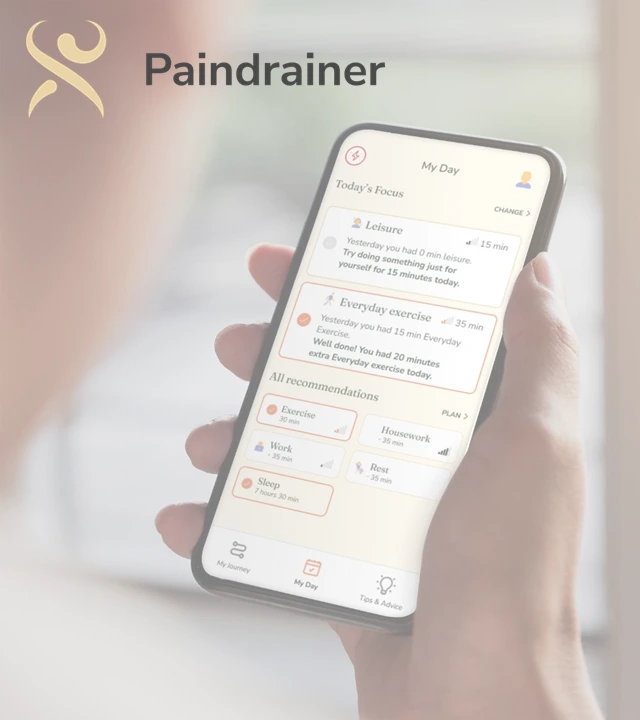
Paindrainer streamlines RTM implementation with purpose-built tools designed specifically for pain management:
- US class I, 510(k) exempt medical device for activity pacing and therapeutic monitoring
- Built-in clinical dashboards with functional trend visualization
- Validated PRO questionnaires and surveys
- Automated compliance documentation for RTM codes, reducing administrative burden
- Displays trends in functional metrics, enabling clinicians to act promptly
By meeting CMS documentation standards—16 days of active monitoring per month combined with time-tracked professional review—Paindrainer helps providers deliver clinically valid, reimbursable RTM services without administrative complexity.
Frequently Asked Questions
What is the difference between RTM and RPM? RTM tracks non-physiologic therapeutic responses (function, pain interference, adherence). RPM monitors physiologic data (heart rate, blood pressure, glucose). Both are Medicare-covered but serve different purposes.
Which CPT codes are used for RTM billing? Medicare RTM codes are 98975-98981, covering initial setup (98975), device supply (98976/98977), and monthly clinical review time (98980/98981).
How many monitoring days are required? Patients must engage for at least 16 days per 30-day period to meet Medicare documentation standards.
Can RTM be used for all chronic pain conditions? RTM is appropriate for any condition where functional outcomes can be measured: chronic low back pain, fibromyalgia, arthritis, CRPS, post-surgical pain, neuropathic pain syndromes.
Are commercial insurers covering RTM? Coverage varies by insurer, but many commercial payers are following Medicare's lead. Verify coverage with individual payers before implementation.
The Path Forward
Functional improvement monitoring represents a transformation in clinical thinking. By shifting focus from pain suppression to functional restoration, providers deliver more meaningful, patient-centered care.
Ready to learn how to implement RTM in your practice? Our next blog covers patient selection, workflow integration, and practice economics.
Want to know about 2026 code changes? Significant expansions take effect January 1, 2026, lowering thresholds and expanding access. News will be published soon on our blog.
Key Takeaways

Functional restoration is the primary therapeutic goal in chronic pain management.

RTM enables continuous, reimbursable monitoring using Medicare codes 98975-98981

Functional tracking improves outcomes and reduces opioid reliance.

Paindrainer provides the infrastructure for compliant, clinically valid RTM.
Contact us for a clinical demonstration
See Paindrainer CARE system in action—watch our video now.
Important Notice: Paindrainer is a Class I medical device intended for activity pacing and therapeutic monitoring. Individual results may vary. The information provided here is for educational purposes and does not constitute medical advice. Healthcare providers should use their professional judgment when implementing RTM programs and selecting patients. All billing and reimbursement information should be verified with payers.
202512_EN031